Es befinden sich keine Produkte im Warenkorb.

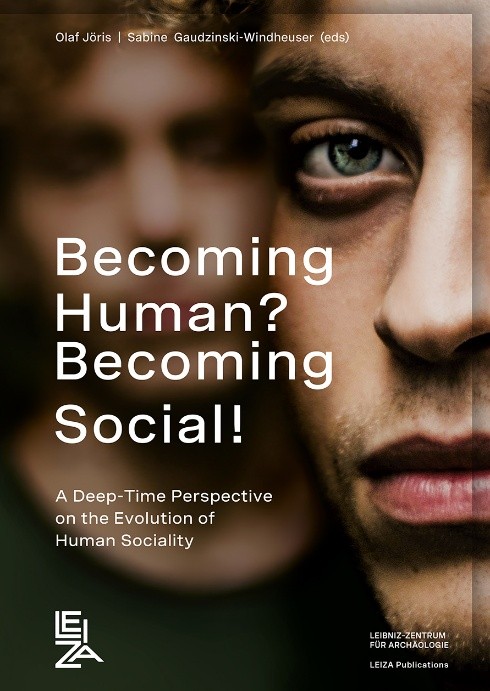
Becoming Human? Becoming Social!
A Deep-Time Perspective on the Evolution of Human Sociality
This volume presents a series of papers from a highly interdisciplinary symposium that brought together researchers from across archaeology, evolutionary biology, cognitive science, primatology, and social anthropology. What united them was a shared conviction that to understand human sociality today, we must first recover the deeper evolutionary story from which it grew.
Lieferzeit: in Planung
When did we begin to adopt the perspective of others? When did empathy cross the threshold into mutual care? When did we first begin to emphasize our place in society and develop unique identities? These questions concern the architecture of the human mind as it encounters other minds, the cognitive and emotional machinery that evolution built over hundreds of thousands of years, long before the first city wall, the first law code, the first throne. Every institution we have ever implemented rests on that older foundation. In multi-disciplinary perspective, the volume addresses questions that span from the origins of human group size, demography, and sexual behaviour to questions at the very frontier of what science can currently answer. Drawing on material culture, developmental psychology, comparative primatology, and evolutionary modelling, the adressed questions push toward a richer account of what it means, and what it costs, to become social. In doing so, they will bring us closer to understanding the deepest paradox of human nature, i.e., that the same evolved capacity for sociality underlies both our most profound acts of care and our most devastating acts of violence.
Folgende Downloads stehen für diesen Titel zur Verfügung:
Das könnte Sie auch interessieren
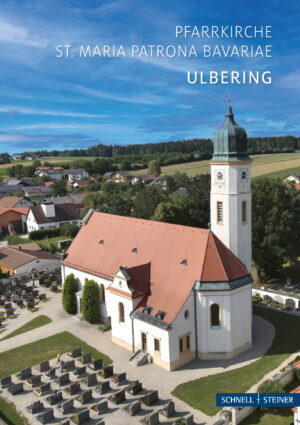
Ulbering
St. Maria Patrona Bavariae
4,00 €
Enthält 7% Mwst.
zzgl. Versand
Lieferzeit: ca. 2-3 Werktage
In den Warenkorb

Das Wahrzeichen der Metropole. Die Pariser Kathedrale Notre-Dame und die Frömmigkeit der französischen Könige im Mittelalter
Texte – Bilder – Rituale – Objekte
49,95 €
Enthält 7% Mwst.
zzgl. Versand
Lieferzeit: ca. 2-3 Werktage
In den Warenkorb

Hoftheater – Theaterhöfe
Räume, Konzepte und Praxis des Theaters seit dem 18. Jahrhundert
34,95 €
Enthält 7% Mwst.
zzgl. Versand
Lieferzeit: ca. 2-3 Werktage
In den Warenkorb

Vierzehnheiligen
Basilika
4,00 €
Enthält 7% Mwst.
zzgl. Versand
Lieferzeit: ca. 2-3 Werktage
In den Warenkorb