Es befinden sich keine Produkte im Warenkorb.

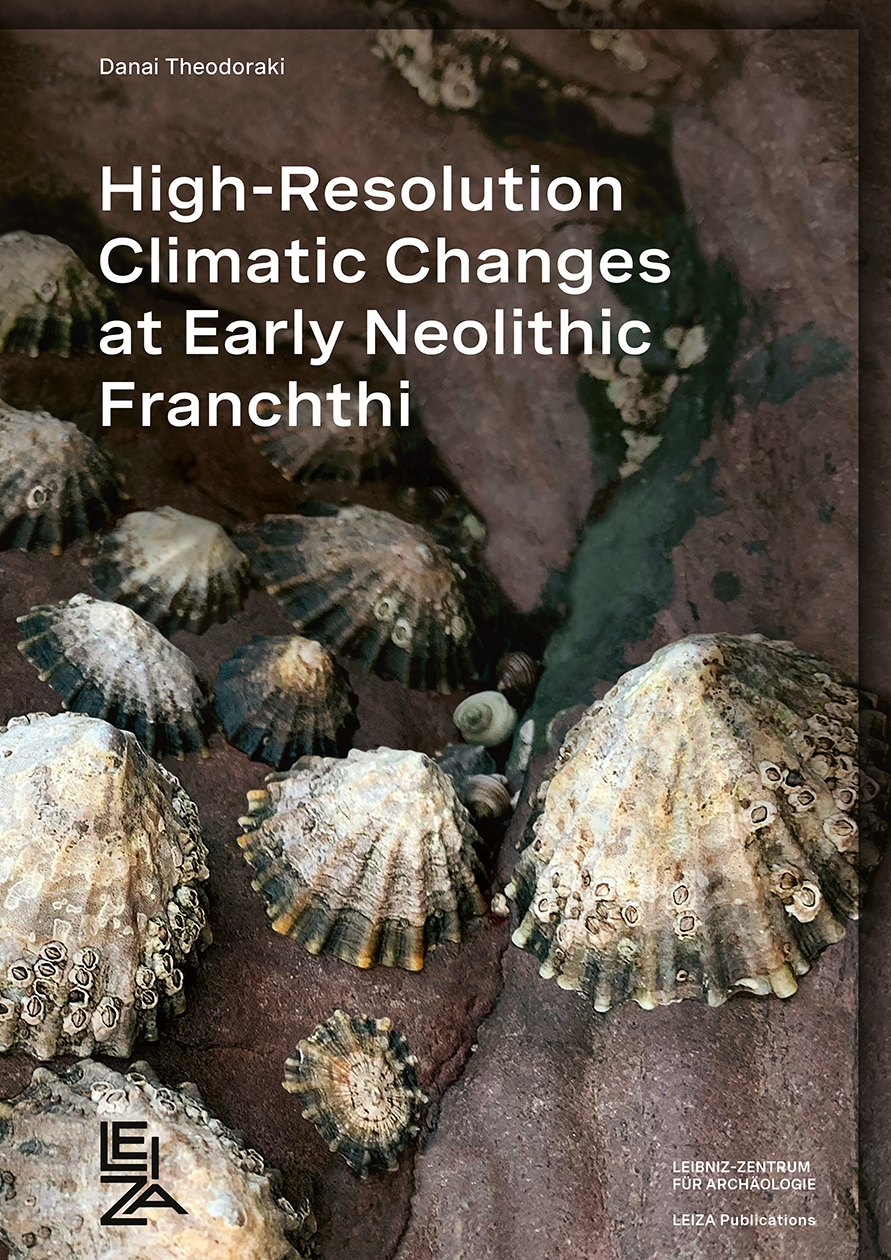
High-Resolution Climatic Changes at Early Neolithic Franchthi
This doctoral research investigates how early farming communities at Franchthi, a key coastal settlement in southern continental Greece, interacted with their environment during the start of the Neolithic. It examines how climatic conditions may have influenced the westward spread of early farming communities from the Near East and Anatolia into Europe, contributing to one of the most significant transformations in European prehistory. Central to this research is the question of whether climatic stress shaped the pace and trajectory of Neolithic migration.
Lieferzeit: ca. 2-3 Werktage
Using mollusc shells from Franchthi as a case study, it reconstructs seasonally resolved climatic data, enabling insights into short-term environmental variability and its potential effects on early farmers. This interdisciplinary study explores the interplay between climate and human agency. Ultimately, it offers a nuanced understanding of how prehistoric communities may have adapted to environmental fluctuations, providing perspectives on human resilience and adaptation in the face of climate change. Diese Doktorarbeit untersucht, wie frühe bäuerliche Gemeinschaften in Franchthi, einer bedeutenden Küstensiedlung im südlichen Festlandgriechenland, während des frühen Neolithikums mit ihrer Umwelt interagierten. Sie analysiert, inwiefern klimatische Bedingungen die westliche Ausbreitung früher landwirtschaftlicher Gemeinschaften aus dem Nahen Osten und Anatolien nach Europa beeinflusst haben könnten und somit zu einem der bedeutendsten Umbrüche der europäischen Vorgeschichte beitrugen. Im Fokus steht die Frage, ob klimatischer Stress das Tempo und die Richtung der neolithischen Migration prägte. Durch die Kombination von laserinduzierter Plasmaspektroskopie (LIBS) und Sauerstoffisotopenanalyse an archäologischen Molluskenschalen schließt die Studie eine Lücke zwischen archäologischen und klimatischen Archiven und ermöglicht eine hochauflösende Rekonstruktion vergangener Klimabedingungen. Mit der Zielsetzung, langjährige methodische Herausforderungen bei der Verknüpfung archäologischer und paläoökologischer Daten zu bewältigen, führt das Projekt einen innovativen, hochauflösenden Ansatz zur Synchronisierung dieser Archive ein. Anhand von Molluskenschalen aus Franchthi werden saisonal aufgelöste Klimadaten rekonstruiert, was Einblicke in kurzfristige Umweltveränderungen und deren potenzielle Auswirkungen auf frühe Bauern erlaubt. Diese interdisziplinäre Studie erforscht das Zusammenspiel von Klima und menschlichem Handeln. Letztlich bietet sie ein differenziertes Verständnis dafür, wie prähistorische Gemeinschaften auf Umweltveränderungen reagiert haben könnten, und liefert neue Perspektiven auf menschliche Resilienz und Anpassung angesichts klimatischer Umbrüche.
Folgende Downloads stehen für diesen Titel zur Verfügung:

Tierdarstellung von Gönnersdorf
Nachträge zu Mammut und Pferd sowie die übrigen Tierdarstellungen
44,00 €
Enthält 7% Mwst.
zzgl. Versand
Lieferzeit: ca. 2-3 Werktage
In den Warenkorb

Der altpaläolithische Fundplatz Dmanisi (Georgien, Kaukasus)
Archäologische Funde und Befunde des Liegenden Fundkomplexes im Kontext der Frühen Menschheitsentwicklung
39,00 €
Enthält 7% Mwst.
zzgl. Versand
Lieferzeit: ca. 2-3 Werktage
In den Warenkorb

Die Peloponnes. Ein archäologischer Reiseführer.
Von Olympia bis Mykene. Bekannte archäologische Stätten und Geheimtipps der Peloponnes. Kunstreiseführer mit detailliertem Karten-Material
35,00 €
Enthält 7% Mwst.
zzgl. Versand
Lieferzeit: ca. 2-3 Werktage
In den Warenkorb

Die Konzentrationen IIb und IV des Magdalénien-Fundplatzes Gönnersdorf
(Mittelrhein)
20,00 €
Enthält 7% Mwst.
zzgl. Versand
Lieferzeit: ca. 2-3 Werktage
In den Warenkorb